Specializing in veterinary parasitology
Norman Laboratories provides fast, accurate fecal egg counts and fecal exams on your schedule. Results directly to your email inbox.
Key reasons for conducting equine fecal egg counts include:
Targeted Deworming: Identifies "high shedders" that require more frequent deworming, allowing for a strategic approach rather than treating every horse in a herd on the same schedule.
Combating Resistance: Helps prevent the overuse of anthelmintics (dewormers), which has led to significant resistance, making some products ineffective.
Evaluating Effectiveness: Comparing fecal egg counts 10-14 days after treatment (Fecal Egg Count Reduction Test) tells owners if the dewormer worked.
Monitoring Health: Helps diagnose issues that can cause weight loss, poor coat, digestive issues, and colic.
Environmental Management: Reduces the number of larvae deposited on pastures.
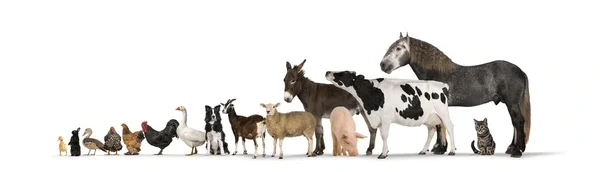
We can test other species as well.

Our Founder
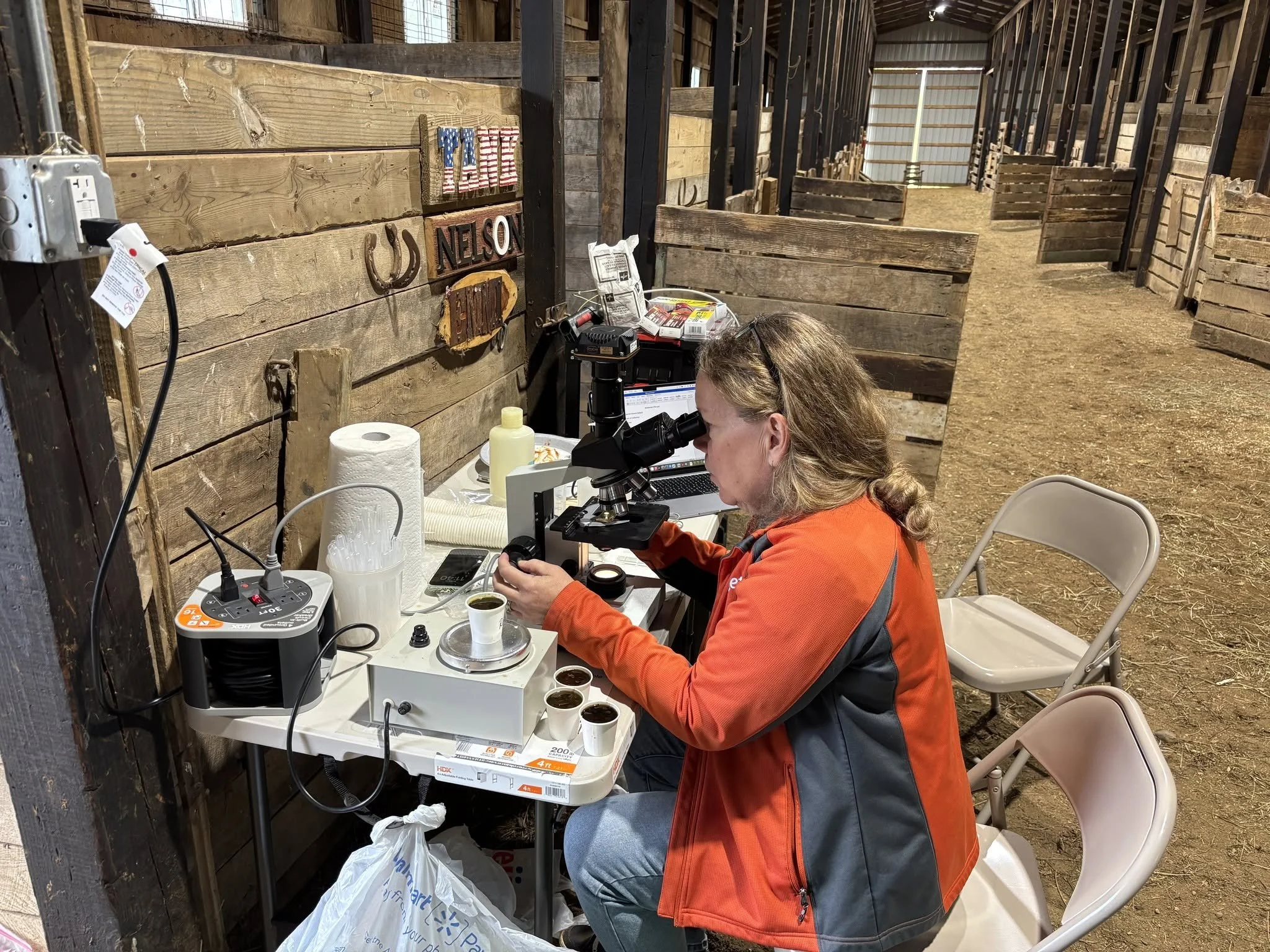
Mobile laboratory
Ask us about our mobile lab!
We will come right to your barn and do on the spot fecal egg counts and individual counseling while you wait.
A tried and true fun social event!
I am based in southern New England but we have been known to travel far and wide for a barn party.
Testing by mail
Sample Collection Guidelines
Fecal samples should be as fresh as possible. An ideal sample is one that never hits the ground.
Picking up feces that have been on the ground for an extended period of time carries the risk of poor results due to contamination, or perhaps even an non-evaluable sample.
Place the fecal sample into a zip lock style baggie and label with the animal identification/name.
Please keep samples refrigerated (never frozen) prior to shipping.
While samples must be kept cool, it is imperative that samples are never frozen. Parasite eggs shatter when frozen and can no longer be detected. The lab is in Connecticut, so during periods of cold weather, samples should be shipped with some form of insulation to prevent freezing.
How much feces will you need to send?
For egg per gram (EPG) counts for horses and ruminants (McMaster test), please ship about two fecal balls or about 1/4 cup. I will need about 10 grams of feces to run the test. For small animals (Modified Wisconsin test) please ship a sample at least the size of a lima bean.
Mail to
Susan Holzmer
29A Flagg Hill Road
Colebrook, CT 06021
sholzmer@gmail.com
Your samples will be processed and reports will be sent via email, normally within 1-3 days after receipt. Please check your junk folder if you do not see your report, and notify us if you have not received it.
Sample Submission
Please include the following information with your shipment:
-Name
-Phone number
-Email address
-Animal name or identification
-Requested test (McMaster (horses, ruminants), Modified Wisconsin (Pets, chickens, etc) or Baermann (horses, ruminants).
-Species the sample is from-this seems obvious but is critical to get you accurate results!
-If submitting samples for a fecal egg count reduction test (FECRT), please indicate the last time deworming was done and what product was used.
Sample Submission Form
Susan Holzmer holds a BS in Animal Science from University of Connecticut, an MS in Biology from University of Saint Joseph and MPS in Veterinary Parasitology from Cornell University College of Veterinary Medicine.
Sue has over 35 years of experience in veterinary research with American Cyanamid, Fort Dodge Animal Health, Pfizer Animal Heath and Zoetis.

Tests Offered
🔬 McMaster test: $15 per sample
The McMaster test is a quantitative test that is appropriate for animals that are typically infected with large numbers of strongyle type internal parasites such as horses, cattle, camelids and small ruminants. The sensitivity is ~25 to 50 EPG. Eggs per gram are reported to you.
This test is not appropriate for dogs, cats, swine or birds. If you have questions about what test is appropriate for your animals, please email me.
EPG counts estimate of how heavily an animal is infected with internal parasites (mainly gastrointestinal strongylid worms).
The McMaster test is a tool to help Guide Deworming Decisions
Rather than deworming animals on a fixed schedule, the McMaster test is used to:
Identify animals that actually need treatment
Avoid unnecessary use of dewormers
Support targeted selective treatment
This helps slow the development of anthelmintic resistance (parasites becoming resistant to deworming drugs).
The test is also used in a Fecal Egg Count Reduction Test (FECRT):
A fecal sample is tested before deworming
Another sample is tested 10–14 days after treatment
The percentage reduction in egg count shows whether the dewormer is working
By sampling multiple animals, producers can assess herd health by:
Monitoring overall parasite levels
Tracking seasonal parasite trends
Adjust grazing and management practices
🔬 Modified Wisconsin test (centrifugal fecal flotation): $15 per sample
The Modified Wisconsin fecal flotation test is a qualitative fecal examination technique designed to detect very low numbers of parasite eggs in feces. It is more sensitive than McMaster methods. Worm egg numbers are not typically reported with these tests, we will report the presence or absence of parasite eggs.The modified Wisconsin test is appropriate for animals that are not typically infected with large numbers of internal parasites, such as dogs, cats and birds.
🔬 Baermann test: $25 per sample
The Baermann fecal test (Baermann technique) is a diagnostic method used to detect live parasite larvae in feces, rather than parasite eggs.Its primary purpose is to diagnose infections with parasites that shed larvae instead of eggs; for example:
Aelurostrongylus abstrusus – catsDictyocaulus viviparus – cattle
Dictyocaulus arnfieldi – horses
Angiostrongylus vasorum – dogs
Please note: The Baermann test takes about 5 days.
Fecal Cultures upon request.
FAQ
Q: What species of animals does Norman Labs test for parasites?
A: Horses, cattle, pigs, birds, dogs, cats, small ruminants, reptiles, etc. If you have any questions about your particular species of beast, send me an email and I’ll guide you.
Absolutely NO HUMANS.
Q: Who is the best small ruminant (goat, sheep, camelid) parasitologist in the whole wide world?
A: Sandi Walters of Meadowmist Laboratory Services, found here:
https://meadowmistlabservice.com/
I highly recommend Meadowmist labs for all of your goat needs. While I can certainly process small ruminant samples for you, Sandi is the GOAT. Just saying.